

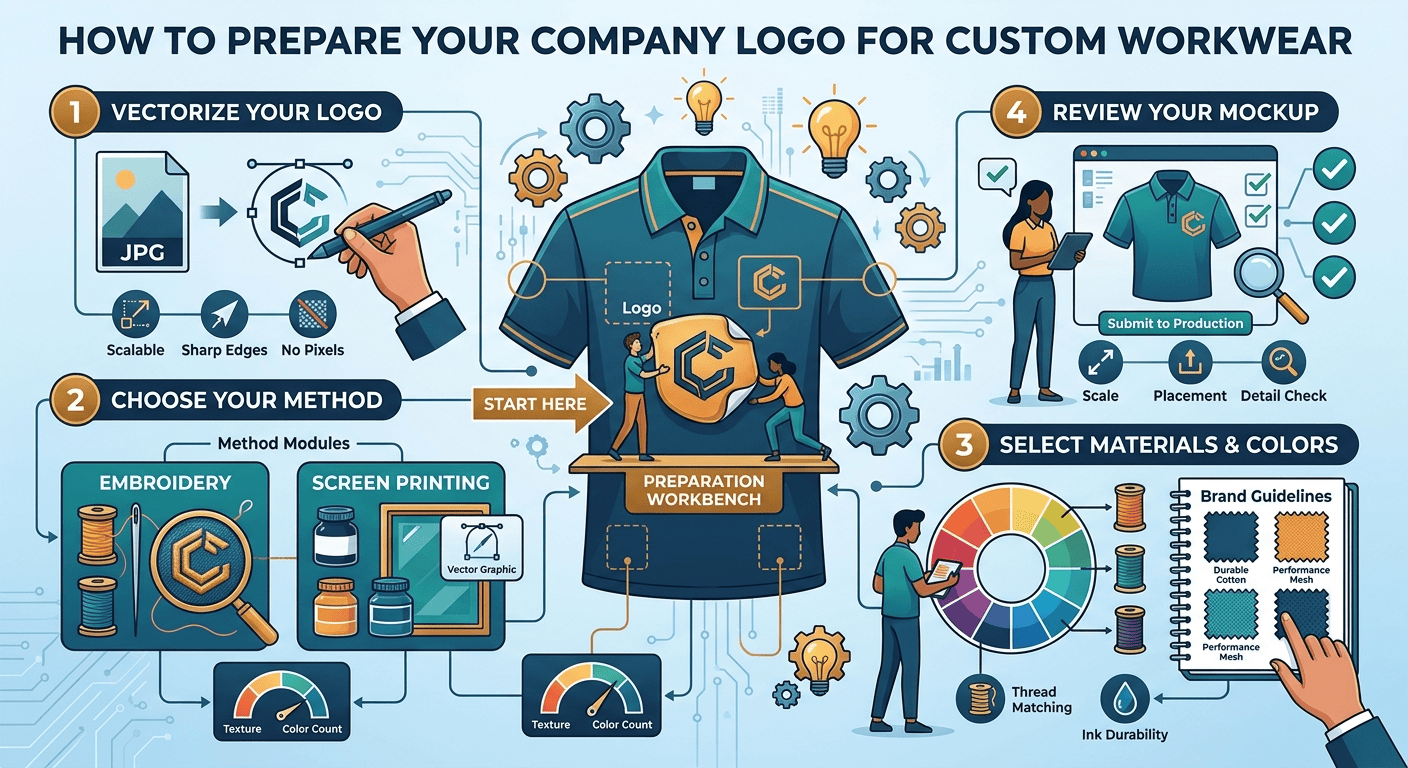
A company logo is one of the most visible parts of branded workwear. Whether it appears on a T-shirt, polo shirt, hoodie, or jacket, a clear and well-positioned design helps employees look professional and makes your business easier to recognize.
However, a logo that looks good on a website or business card may not work equally well on clothing. Fabric, print size, colors, and customization methods can all affect the final result. If your business operates in Australia, the UK, or the USA, these practical steps will help you prepare your company logo for custom workwear.
1. Start With a High-Quality Logo File
The first step is to provide your supplier with a clear logo file. Low-resolution images copied from websites or screenshots can become blurry when enlarged.
Vector formats such as AI, EPS, and SVG are generally preferred because they can be resized without losing quality. High-resolution PNG files with transparent backgrounds may also work for certain printing methods.
Before submitting your artwork, ask your supplier which file formats they accept.
2. Choose Colors That Work on Fabric
Your brand colors may look different when printed or embroidered on clothing. A color that appears bright on a computer screen can look slightly different on cotton, polyester, or blended fabrics.
Check how your logo contrasts with the garment color. For example, a dark logo may be difficult to see on black or navy shirts.
Request a digital mock-up or physical sample before approving a large order. This simple step can prevent costly design mistakes.
3. Select the Right Logo Size
Logo size affects both visibility and appearance. A small chest logo often creates a clean, professional look, while a larger back design makes business details more noticeable.
Consider the garment type and how employees will wear it. A logo that works well on a polo shirt may need adjustments for a hoodie or work jacket.
Avoid making the design unnecessarily large or overcrowded.
4. Decide Between Printing and Embroidery
The best customization method depends on your logo and clothing material.
- Embroidery: Suitable for simple logos on polo shirts, caps, and selected jackets. It creates a textured finish.
- Screen printing: Often practical for larger orders with straightforward designs.
- Direct-to-Film (DTF) printing: Can reproduce detailed, colorful artwork on compatible garments.
- Heat transfer: Useful for certain designs and smaller production runs.
Ask about fabric compatibility, washing instructions, and expected durability before choosing.
5. Simplify Detailed Logo Designs
Very small text, thin lines, and complicated graphics can become difficult to reproduce on clothing. Embroidery, in particular, may require adjustments to fine details.
If your original logo contains several elements, consider preparing a simplified version for smaller placements. Keep the essential brand features recognizable.
6. Approve a Sample Before Bulk Production
Never assume the finished workwear will look exactly like the digital design. Request a sample or production mock-up showing the logo’s size, placement, colors, and finish.
Check the result carefully before approving the full order. This is especially important when ordering uniforms for an entire team.
Key Points to Remember
- Provide high-quality logo artwork.
- Check colors against the garment fabric.
- Choose suitable logo sizes and placements.
- Match printing or embroidery to your design.
- Approve a sample before bulk production.
Frequently Asked Questions
1. What file format is best for a company logo for custom workwear?
AI, EPS, and SVG vector files are generally preferred. High-resolution transparent PNG files may also be accepted.
2. Can I use a JPG logo for custom workwear?
Yes, if the image has sufficient resolution. However, vector artwork usually provides better flexibility when resizing.
3. Where should a company logo be placed on work shirts?
Common placements include the left chest, right chest, sleeve, and upper back. The best location depends on garment style and branding needs.
4. Is embroidery or printing better for company logos?
Embroidery suits many simple logos, while printing is often better for detailed or colorful designs.
5. Should I request a sample before ordering custom workwear?
Yes. A sample helps you check logo quality, colors, placement, and garment suitability before committing to a bulk order.
If you’re preparing a Company Logo for Custom Workwear, ShopVanallc offers custom apparel options to help businesses create consistent, professionally branded clothing. Visit ShopVanallc to learn more.