

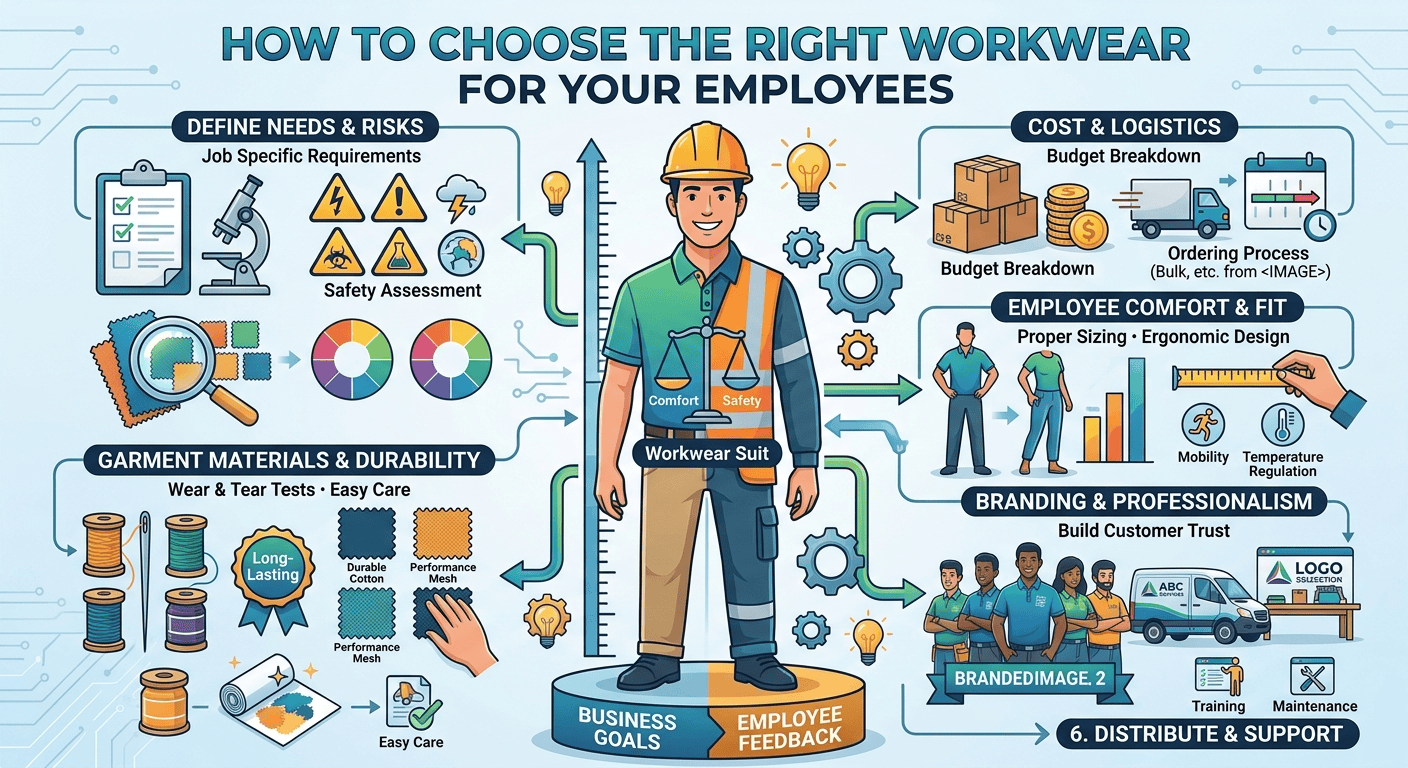
Choosing the right workwear for your employees is an important business decision. The clothing your team wears affects comfort, daily performance, workplace safety, and the way customers recognize your business. Whether you manage a construction company in Australia, a retail store in the UK, or a service business in the USA, suitable workwear should meet practical needs while presenting a consistent professional image.
Instead of choosing uniforms based only on appearance or price, consider how employees work, the conditions they face, and how often their clothing needs replacing. These six steps can help you make a better decision.
1. Understand Your Employees’ Daily Tasks
Start by identifying what employees actually do during their shifts. Construction workers may need durable shirts and protective clothing, while retail staff may prefer lightweight polo shirts or branded T-shirts.
Consider movement, physical activity, customer interaction, and workplace conditions. A uniform that looks attractive but restricts movement or feels uncomfortable is unlikely to be a good long-term choice.
2. Choose Comfortable and Durable Fabrics
Fabric affects how workwear feels and performs throughout the day.
- Cotton: Soft and breathable, making it suitable for many everyday uniforms.
- Polyester: Lightweight, quick-drying, and often easy to maintain.
- Cotton-polyester blends: Combine comfort with practical durability.
Think about local weather as well. Lightweight fabrics can suit warmer Australian climates, while layering options may be useful during colder UK and US seasons.
3. Consider Workplace Safety Requirements
Some industries require specific protective clothing. Construction, manufacturing, and outdoor work may involve risks that ordinary uniforms cannot address.
Depending on the job, employees may need high-visibility garments, flame-resistant clothing, protective footwear, or other appropriate equipment. Check the relevant workplace safety requirements in your country and conduct a proper risk assessment.
Remember that branded workwear is not automatically protective workwear.
4. Select the Right Style and Fit
Different clothing styles suit different workplaces. Polo shirts often work well for retail and customer-facing teams, while T-shirts can be practical for casual environments. Hoodies and jackets provide additional options for colder conditions.
Offer suitable sizes and check garment measurements before ordering. Employees should be able to bend, reach, walk, and perform their tasks without clothing feeling restrictive.
5. Add Your Company Branding Carefully
Custom workwear helps employees look like part of one team. A company logo on the chest, sleeve, or back can make staff easier for customers to identify.
Choose colors that match your brand and select a suitable customization method. Embroidery can create a professional finish on polo shirts and jackets, while printing may suit detailed or colorful designs.
Keep the design clear and consistent across different garments.
6. Compare Quality, Costs, and Suppliers
Do not compare suppliers on price alone. Check fabric quality, stitching, customization charges, size availability, minimum order quantities, and delivery times.
Request samples where possible. This allows you to assess comfort and construction before committing to a bulk order. Also consider replacement availability so new employees can receive matching uniforms later.
Key Points to Remember
- Match clothing to employees’ daily responsibilities.
- Choose comfortable, durable fabrics.
- Check safety requirements for each role.
- Select practical fits and suitable styles.
- Keep company branding consistent.
- Compare quality and total costs before ordering.
Frequently Asked Questions
1. What is the best workwear for employees in small businesses?
Polo shirts, T-shirts, hoodies, and jackets are popular choices. The best option depends on the industry and working conditions.
2. How do I choose durable workwear for employees?
Look for suitable fabric blends, strong stitching, reliable construction, and clear washing instructions.
3. Should employees wear branded uniforms?
Branded uniforms can help customers identify staff and create a consistent business appearance.
4. How many workwear items should I provide each employee?
Consider weekly shifts, laundry frequency, job conditions, and replacement needs when deciding quantities.
5. What should businesses consider when ordering workwear in bulk?
Check sizing, fabric, customization options, total pricing, minimum quantities, and delivery schedules.
If you’re looking for Workwear for Your Employees, ShopVanallc offers custom apparel options to help businesses create comfortable, consistent, and professionally branded team clothing. Visit ShopVanallc to learn more.